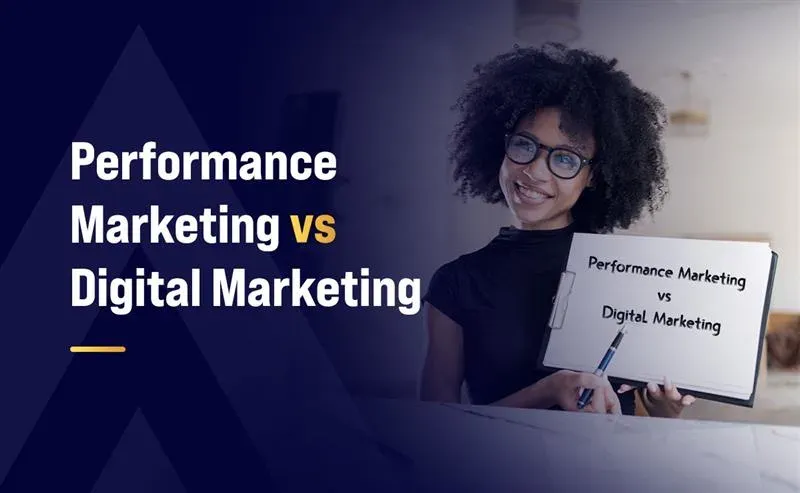

In the digital age, marketing success is no longer defined by visibility alone. Brands today operate in an environment where every investment is questioned, every decision is tracked, and every outcome must be justified. Performance marketing has emerged as a response to this shift—a discipline built around measurable impact, strategic execution, and scalable growth.
Rather than focusing on exposure, performance marketing prioritizes outcomes. It aligns marketing efforts directly with business objectives, ensuring that growth is not only achieved but also quantified and optimized over time.
Performance Marketing as a Business Growth Framework
Performance marketing is often misunderstood as a set of paid advertising tactics. In reality, it functions as a business growth framework that connects marketing activity with revenue generation.
This approach allows organizations to:
- Treat marketing as a profit center rather than a cost center
- Establish clear accountability for performance
- Continuously improve efficiency through testing and learning
By integrating strategy, technology, and analytics, performance marketing becomes a long-term growth driver rather than a short-term campaign tool.
Strategic Foundations of Performance Marketing
Sustainable performance marketing begins with strong strategic foundations. Without a clear structure, even high budgets and advanced tools fail to deliver results.
Key strategic components include
- Defining precise growth objectives tied to business KPIs
- Understanding customer intent and purchase behavior
- Mapping the customer journey across digital touchpoints
- Aligning platforms, messaging, and budgets with funnel stages
This strategic clarity ensures that every campaign serves a defined purpose within the overall growth plan.
The Role of Consumer Intent in the Digital Age
One of the defining strengths of performance marketing is its ability to capture consumer intent. Digital platforms provide signals that indicate when users are researching, comparing, or ready to purchase.
Performance marketing leverages these signals to:
- Deliver contextually relevant messaging
- Engage users at the right moment in their decision cycle
- Reduce friction between interest and conversion
This intent-driven approach significantly improves conversion efficiency and overall campaign effectiveness.
Creative Strategy Built for Conversion
In performance marketing, creativity is not driven by aesthetics alone. Every creative asset is designed with a conversion objective in mind.
Effective performance creatives focus on
- Clear problem–solution communication
- Value-driven messaging rather than generic branding
- Platform-native formats that match user behavior
- Strong and unambiguous calls to action
Creative performance is continuously evaluated, refined, and scaled based on real user response rather than assumptions.
The Science of Full-Funnel Performance Marketing
Performance marketing operates most effectively when structured around the entire customer funnel, rather than isolated conversions.
Funnel-based execution includes
- Awareness: Introducing the brand to relevant audiences
- Consideration: Educating and nurturing interest
- Conversion: Driving decisive actions
- Retention: Maximizing customer lifetime value
This holistic approach allows brands to build sustainable growth pipelines rather than relying on one-time transactions.
Data Intelligence and Predictive Optimization
Data in performance marketing is not limited to reporting past results—it enables predictive optimization.
Advanced analytics help marketers:
- Identify emerging growth opportunities
- Forecast performance trends
- Allocate budgets proactively rather than reactively
- Detect inefficiencies before they impact ROI
As data maturity increases, performance marketing becomes more precise, predictable, and scalable.
Financial Discipline and Budget Efficiency
One of the most valuable aspects of performance marketing is financial discipline. Budgets are allocated based on results, not assumptions.
Key financial advantages include
- Transparent cost-to-revenue tracking
- Real-time ROI visibility
- Dynamic budget reallocation
- Reduced waste through continuous optimization
This financial clarity makes performance marketing especially valuable in competitive and cost-sensitive markets.
Scaling Growth Without Compromising Stability
Growth often introduces risk, but performance marketing enables controlled scaling.
Principles of sustainable scaling
- Expanding only on proven campaigns and audiences
- Maintaining performance benchmarks during budget increases
- Leveraging automation while preserving human oversight
- Monitoring marginal returns at every growth stage
This structured scaling approach ensures growth remains profitable rather than volatile.
Performance Marketing in a Privacy-Driven Ecosystem
The digital landscape is evolving toward greater privacy and data protection. Performance marketing is adapting accordingly.
Modern performance strategies emphasize
- First-party data collection
- Consent-based engagement
- Privacy-compliant tracking solutions
- Trust-driven customer relationships
These practices ensure long-term viability while maintaining performance effectiveness.
Organizational Impact of Performance Marketing
Beyond campaigns, performance marketing influences how organizations operate.
It encourages:
- Cross-team alignment between marketing, sales, and product
- Faster decision-making cycles
- A culture of experimentation and accountability
- Data-informed leadership strategies
As a result, performance marketing often drives transformation beyond marketing departments.
Why Performance Marketing Defines the Digital Age
The digital age demands speed, precision, and accountability. Performance marketing meets these demands by combining technology, insight, and execution into a unified growth system.
Its defining strengths include
- Measurable and transparent outcomes
- Continuous learning and optimization
- Scalable and repeatable growth models
- Strong alignment with business objectives
These qualities make performance marketing a cornerstone of modern digital strategy.
Conclusion:
Performance marketing is not merely a tactical approach—it is a strategic advantage. By enabling brands to measure, optimize, and scale growth with confidence, it transforms marketing into a predictable and controllable engine for success.
In a digital environment defined by competition and complexity, performance marketing provides clarity, discipline, and direction. For businesses seeking sustainable growth in the digital age, it is not just an option—it is a necessity.
Note: The information presented in this article is intended for general informational and educational purposes only. It does not constitute professional marketing, financial, or business advice. Performance marketing outcomes may vary based on industry, market conditions, budget, platform algorithms, and execution strategy.
#PerformanceMarketing #DigitalMarketing #GrowthStrategy #DataDrivenMarketing#MeasurableResults #ROIOptimization #C #MarketingInsights#Carrerbook#Anslation.